
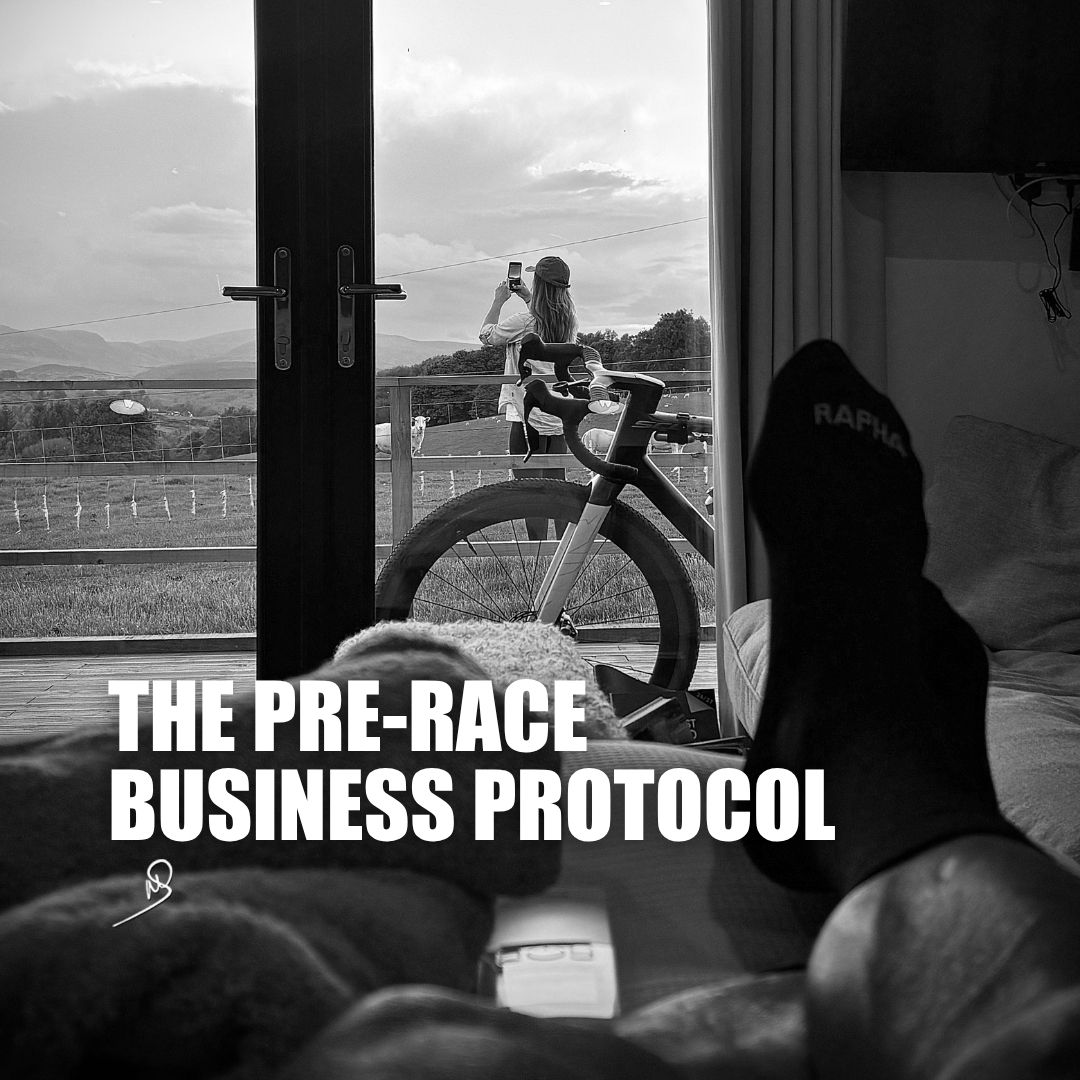


The Pre-Race Business Protocol
Getting to bed early before an important business meeting is important. The same applies before a sports event or a school exam. Nothing groundbreaking there. The interesting part is how it actually plays out.
A few weeks back I raced in Scotland. Lights out at 8:30pm. Alarm at 5:29am. I slept well. Woke relaxed. Moved through the morning with no rush and no stress. The frost outside raised an eyebrow, but otherwise I was calm.
I’ve thought a lot about why.
My routine the night before a race is almost identical to my routine every other night of my life. I’ve practised it thousands of times. Of course sometimes there are nerves before a race or a big meeting. That’s normal. But the routine remains the same. The output is calmness.
We often hear, “Nothing new on race day.” I’d take it a step further. Nothing new on race eve either, maybe even extend it further. Just keep building on what you have already built.
The calmness people admire on the day is rarely created on the day. It comes from the weeks, months and years beforehand. By the time the event arrives, much of it is simply autopilot.
Over the years I’ve run and ridden across deserts, completed multi-day endurance events and spent long periods operating at the edge of physical and mental limits. What I’ve learned from those experiences applies directly to business. Not as a trendy metaphor, more of a method, a practice, an operating system.
Four things stand out.
Routine is the foundation
Routine is formed over time. Doing the same things over and over until they become your normal. This isn’t about rigidity. It’s about creating a foundation that supports the life and performance you want.
Good routines reduce friction. They remove unnecessary decisions. They free up energy for what actually matters. When you study high performers across different domains, you notice similar characteristics. Less noise. Fewer distractions. Narrower inputs. More focus.
Decision fatigue is real. Every unnecessary choice you make before an important moment costs something. The protocol isn’t about becoming a robot. It’s about protecting your best energy for when it matters most.
State management is a performance skill
Many people walk into important meetings already depleted. Too little sleep. Too much caffeine. A morning spent reacting to emails, messages and problems. Then they wonder why they don’t perform at their best.
Your state on the big day is largely a reflection of the days before it. There is no magic switch that creates calm on demand. You build it over time.
This is one of the greatest lessons endurance sport teaches. You cannot fake readiness. You cannot rush to the start line and expect to perform. The body and mind know the difference between preparation and hope.
Business often believes the margins are wider than sport. I’m not convinced they are. In many cases they may be even tighter.
Recovery is part of the protocol
Prior to a major presentation, negotiation or client meeting, what does the day before look like?
Are you still in back-to-back meetings at 7pm? Answering emails at midnight? Trying to squeeze one last drop of output from an empty tank?
Recovery isn’t laziness. It’s strategy. Nobody would suggest running a marathon the day before an Olympic final. Yet people routinely do the business equivalent.
The day before my race I rode easy with Mark and Rob. We laughed, drank coffee and enjoyed the day. We all arrived at the start line feeling ready rather than exhausted.
Trust the preparation
This has almost become a cliché, perhaps because people don’t want it to be true.
The best performers I’ve coached, whether athletes or executives, eventually arrive at the same place. They know when the work is done. They understand that more is not always better. They stop searching for the final secret. They stop forcing extra output.
They return to the basics. Sleep. Food. Simplicity. Recovery. Trust.
The real question isn’t what you do the night before. The real question is whether you’re willing to build the protocol every day so that when the moment arrives, performance becomes the natural outcome.
No weakness,
Marcus
Comments